
Winter Is Upon Us
A guide to winterization
12/15/20254 min read
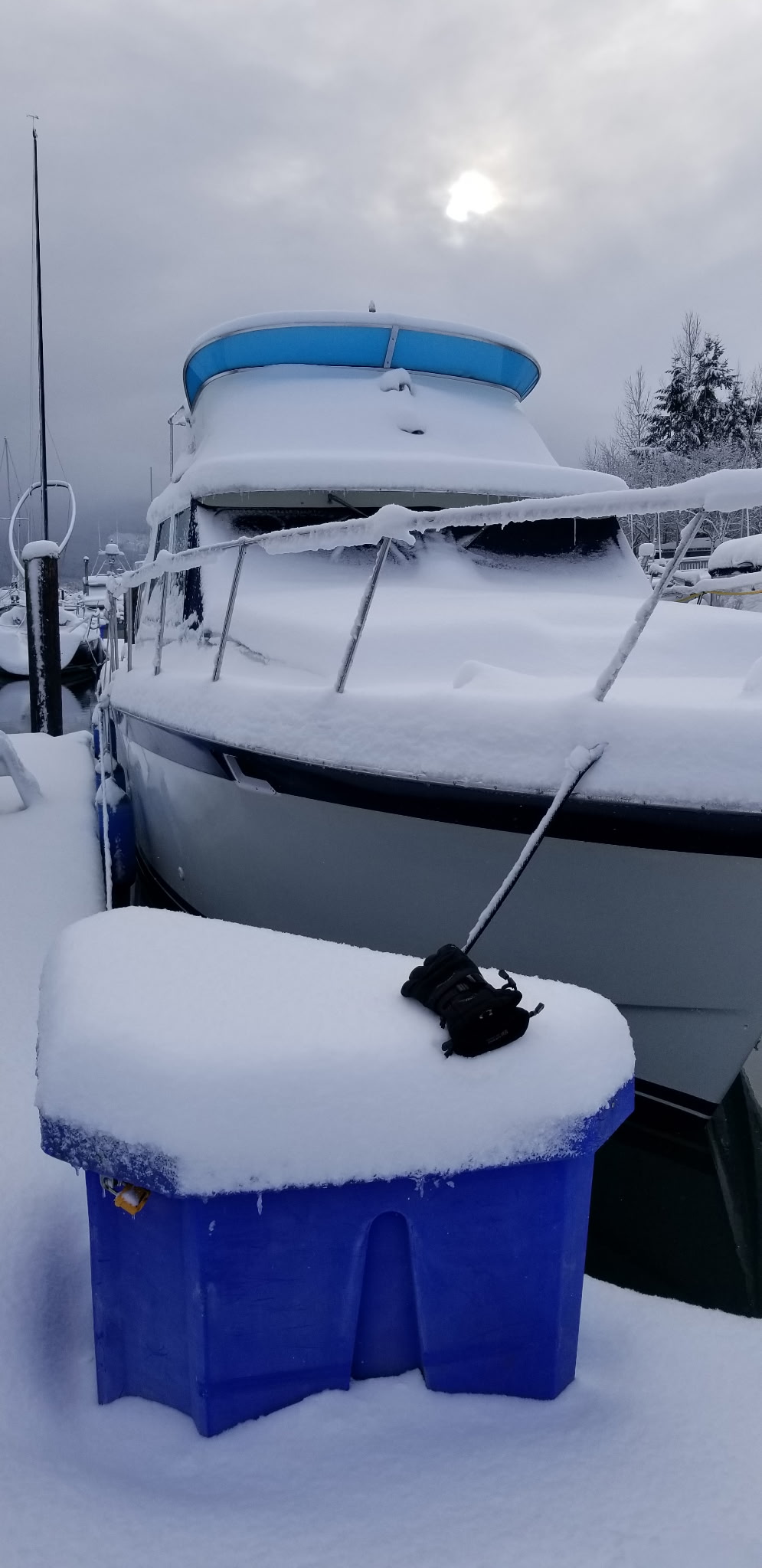
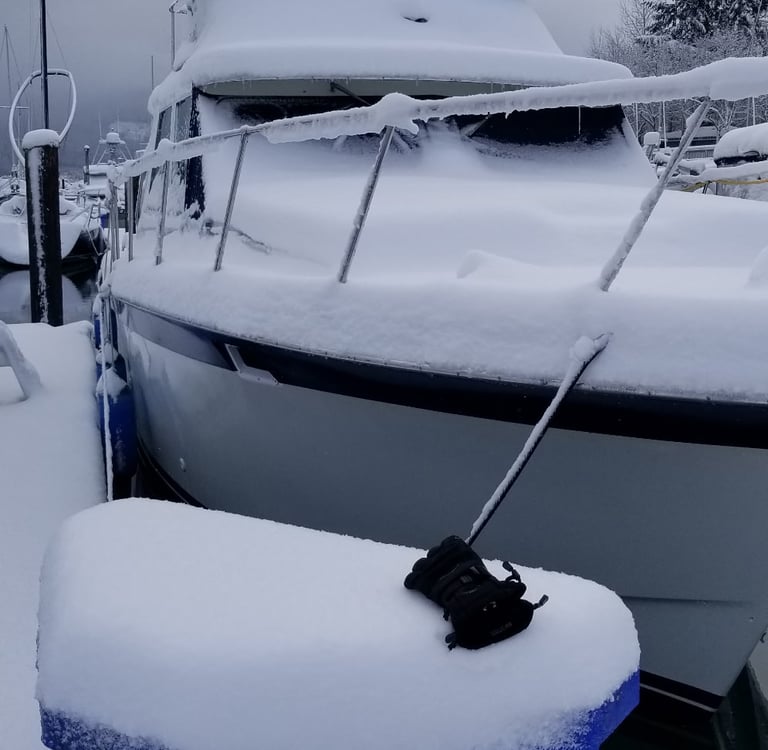
Winter Is Upon Us: A Bilge Baboon Guide to Winterizing Your Boat
Ahoy, fellow Baboons — it’s that time of year again. The days are getting shorter, the docks are getting emptier, winter is underway, and every boater north of Florida suddenly develops the same seasonal twitch.
“Did I winterize the boat yet?”
Whether winterization for you means shrink-wrapping your baby like leftovers after Thanksgiving or simply tossing a space heater aboard and whispering, “Good luck out there,” This guide will walk you through it — especially for us northern boaters — with a little humor and a healthy respect for cold fingers and wet boots.
Why Winterization Matters (Even for People in Denial)
Depending on where you live, "winterization" can range from a casual suggestion to a legally binding survival requirement.
Down south: Your “winter” is three days of wearing a hoodie. Congrats.
Up north: Your boat is about to enter cryogenic stasis like a sci-fi character waiting for the sequel.
Cold weather can damage plumbing, tanks, engines, electronics, and even your boat’s morale. (Trust me, they get grumpy if you ignore them.)
Step 1 — Decide Your Wintering Style
Every boater falls into one of these categories:
1. The Full Haul-Out Commandos
Boat goes on stands, wrapped tighter than a swaddled baby, and the owner doesn’t return until spring like a migrating bird.
2. The Slip-Side Survivors
Boat stays in the water full time, and you rely on the fact that water is usually warmer than air.
Good plan — unless it isn’t.
3. The Winter Boaters aka “The Lunatics” Bless you. I know because I am one of you!
You still go out in snowstorms because the water is peaceful, the wildlife is incredible, and nobody else is hogging the anchorages.
Just keep the heat on high and your bravery higher.
Step 2 — Protect the Systems That Hate Freezing
Freshwater System
Drain it. Blow it out. Add antifreeze if needed.
If water hides in there, it will freeze and break something expensive. It's basically the law.
Sewer / Holding Tank
Yes, protect the poop tank. Nothing screams “bad spring launch” like discovering your tank split open like a microwaved burrito. (Been know to happen). Your plumbing and connections are most vulnerable here.
Engine Cooling System
Check coolant strength.
Make sure it’s rated for the lowest temps your area can serve up.
If your engine uses raw water cooling, flush it and treat it properly
Engines are tough — but freeze one, and it cracks faster than a cheap smartphone screen.
Fuel System
Winter storage + untreated fuel = a science experiment.
Add a stabilizer. Use a water dispersant. Keep tanks full to reduce condensation.
Bilge & Pumps
Clear out debris so the pumps can do their job.
Ice buildup + clogged bilge = sad boat noises.
Step 3 — Deal With Snow, Ice & Mother Nature’s Mood Swings
Snow Load
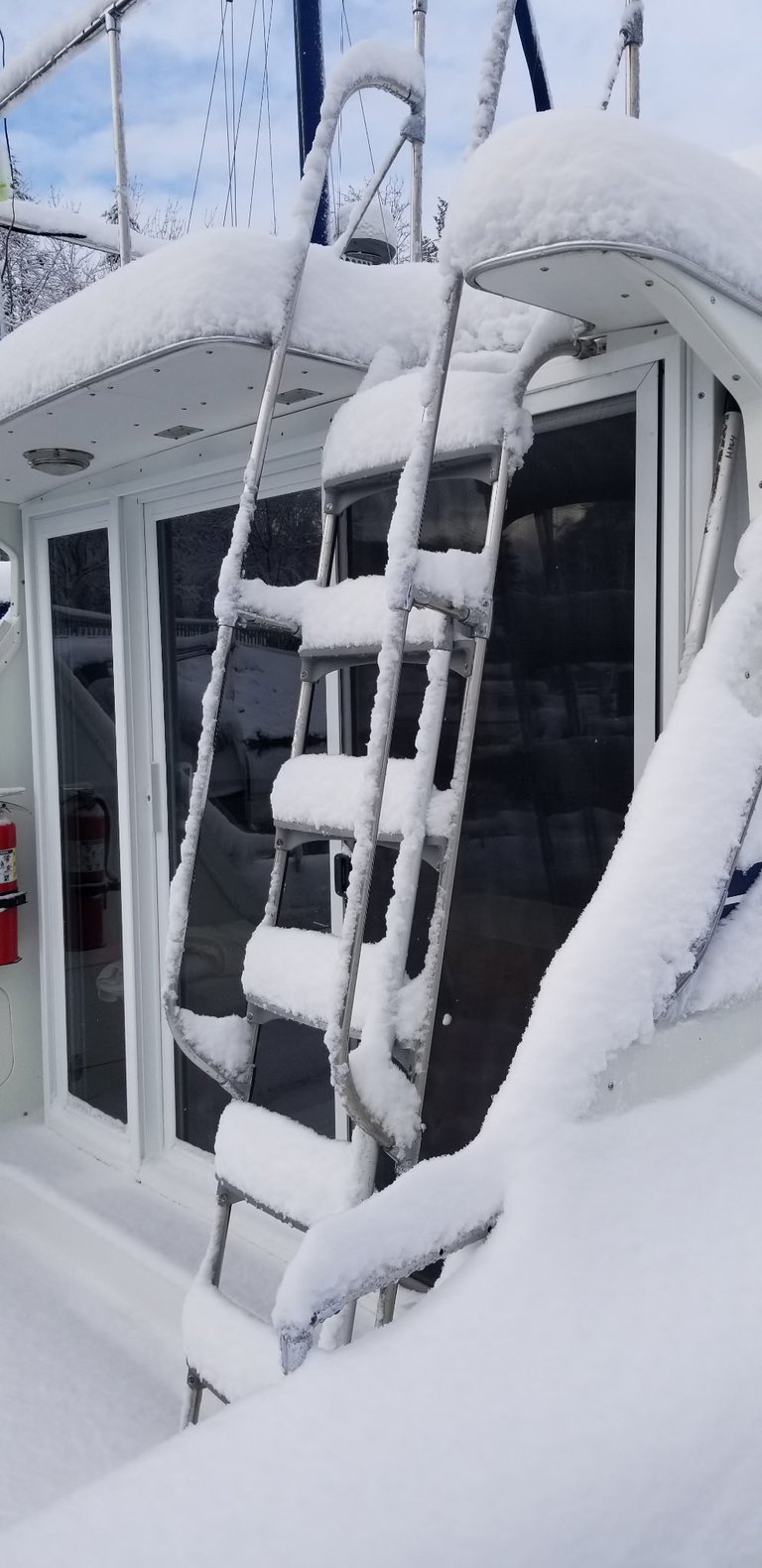
Snow is heavier than it looks. Enough of it can push scuppers underwater, strain supports, or collapse cockpit covers like a cheap lawn chair. I’ve seen covered marinas collapse from the load and take perfectly good boats down with them.
If you live in a snow zone, go knock that stuff off occasionally. Your boat will appreciate it.
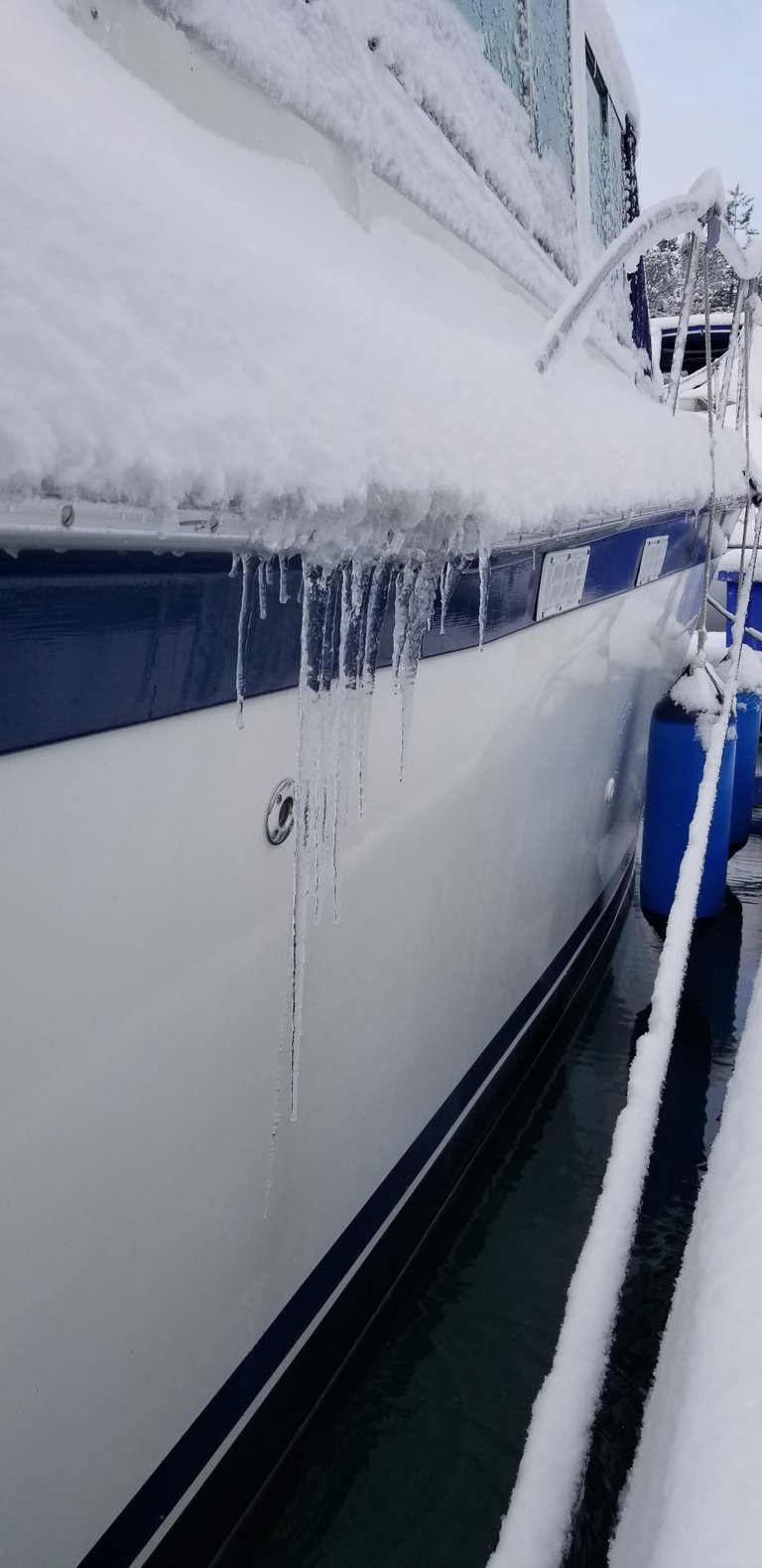
Ice Formation
Ice in scuppers, deck drains, canvas, or hatches can force open seams, create leaks, or freeze water where it shouldn’t be.
Step 4 — Climate Control: The Off-Season Relationship Saver
Many winter boaters just leave a heater aboard to maintain a consistent temperature.
A safe one.
With overheat protection.
Plugged into a trusted circuit.
Dehumidifiers, venting, and air circulation help stop mildew from turning your cabin into a furry ecosystem.
Moisture control is huge — mold loves winter boats like raccoons love the marina dumpster.
Step 5 — The Fun Part: Winter Boating
Here’s the truth no one south of the 37th Latitude can appreciate:
Winter boating is magical.
Calm water. No crowds. Snow falling gently while your engine rumbles along.
A cup of coffee steaming in your hand as you watch the world turn silver and silent.
Just… dress warm. Really warm.
And keep a sharp eye on the weather, because winter does not play around.
Bonus Systems People Forget (Until It’s Too Late)
1. Batteries
Charge fully. Disconnect or hook up a smart charger.
Half-charged winter batteries grow crusty sulfation crystals out of pure spite.
2. Electrical System & Shore Power
Inspect cords, plugs, and outlets.
Do not trust the marina pedestal that looks like Zeus hit it with a lightning bolt.
3. Canvas, Covers & Shrink-Wrap
Good venting = less mold.
Support poles prevent sagging.
Snow loads can weigh more than your mother-in-law’s opinions.
4. Interior Prep
Remove anything that molds, mildews, or mysteriously multiplies.
Crack open the fridge.
Use moisture absorbers.
Use dehumidifiers.
Airflow prevents your cabin from smelling like a forgotten gym bag.
5. Seacocks & Thru-Hulls
Close unused seacocks.
Clear drains.
Inspect for leaks.
If water gets in now, winter will find it, freeze it, expand it, and turn it into a leak with attitude.
6. Engine Room Housekeeping
Spray corrosion inhibitor.
Tighten clamps.
Replace that hose that is “maybe fine” — winter will make it “absolutely not fine.”
7. Antifreeze Types
Quick safety tip:
Pink stuff = non-toxic (freshwater systems)
Coolant = for engines
Don’t mix types
Don’t drink either
(Just covering all bases.)
If you would like a comprehensive PDF checklist for winterization, please click here.
Final Baboon Wisdom
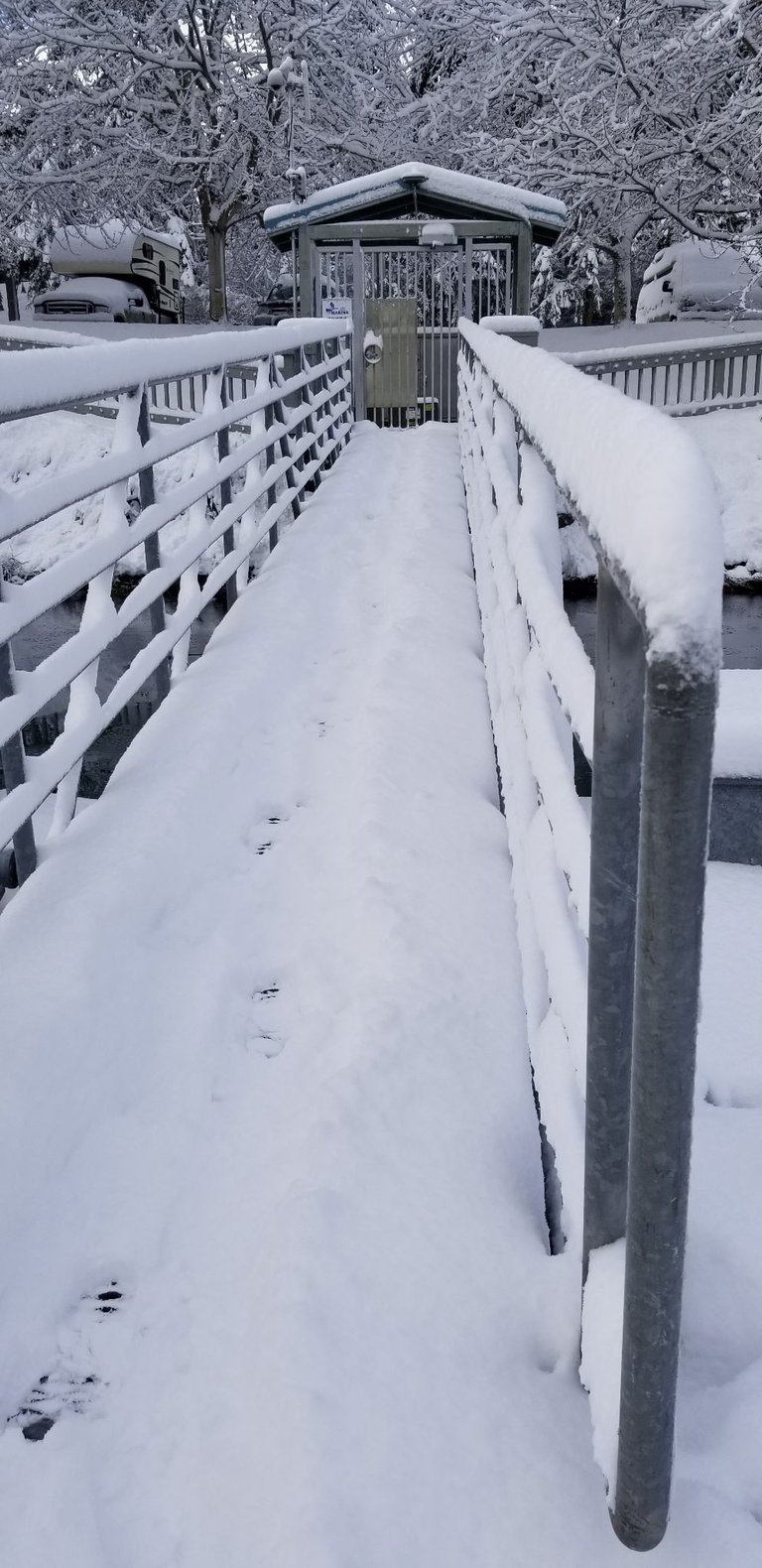
Winter turns the docks themselves into slip-and-slide death traps. The marina gangways? Even a penguin would need traction control. Walk slowly, use railings, keep your hands out of your pockets, and avoid carrying heavy gear if you can avoid it. Ice is everywhere, cleats hide under snow, and your balance suddenly becomes as trustworthy as a cheap bilge pump. Use proper footwear, sweep your slip, know where the ladders are, and never walk winter docks alone. Cold water is not your friend — respect the conditions, shuffle carefully, and don’t give your marina neighbors free entertainment.
Prepare for everything.
Assume chaos.
Double-check your heater.
Check on you pride and joy often.
And don’t wait until you see frost on your dock lines to start.
Do it right, and your boat will survive winter happier than a seagull with a stolen french fry — ready to launch again the moment spring returns.
Contact
crew@bilgebaboon.com
© 2025. All rights reserved.